

The Invisible Architecture of Chance: Probability’s Silent Logic in Games and Physics
Probability is not merely a tool for calculating odds — it is the silent language that structures uncertainty across strategy, games, and the fundamental laws of nature. From the calculated edge in casino games to the probabilistic fabric of quantum particles, chance operates as an invisible architect shaping outcomes without direct control. This article explores how theoretical probability underpins real-world systems, using the modern example of Aviamasters Xmas to illustrate timeless principles of randomness and expectation.
Probability as the Mathematical Language of Uncertainty
At its core, probability quantifies uncertainty—transforming ambiguity into a measurable framework. Defined as the ratio of favorable outcomes to total possible outcomes, it enables precise reasoning in domains where control is illusory. Whether predicting a coin flip or a player’s long-term return, probability provides the foundation for informed decision-making.
This logic extends far beyond games: in physics, the same mathematical framework governs statistical fluctuations and quantum behavior. The probabilistic nature of events reveals a deeper order—one where outcomes emerge not from chaos, but from predictable patterns hidden beneath apparent randomness.
Core Principles: Theory Meets Computation
One of the most tangible expressions of probability is the house edge in casino games. Aviamasters Xmas, for instance, maintains a 97% return-to-player rate—a measurable 3% long-term advantage built into the game’s design. This edge ensures that while short-term variance fuels excitement, over millions of plays, outcomes drift predictably toward statistical equilibrium.
Computational efficiency plays a critical role here, too. Multiplying matrices to simulate complex systems demands significant resources, with classical algorithms requiring O(n³) operations. Innovations like Strassen’s algorithm reduce this to approximately O(n²·⁸⁰⁷), enabling faster, more realistic simulations of probabilistic dynamics in both games and scientific modeling.
The binomial distribution further exemplifies this: P(X=k) = C(n,k) × p^k × (1-p)^(n-k) models discrete trials with success probability p. It underpins expectations in repeated games, showing how consistent outcomes arise from individual uncertainty—like rolling a die thousands of times and observing a balanced average.
| Concept | House Edge (Aviamasters Xmas) | 3% long-term advantage (97% return) |
|---|---|---|
| Matrix Multiplication Complexity | O(n³) classical | Strassen’s: O(n²·⁸⁰⁷) |
| Model Type | Binomial distribution | Simulated multi-stage events |
Probability in Strategic Systems: The Aviamasters Xmas Framework
Aviamasters Xmas exemplifies how probability governs strategic environments. With a 97% return-to-player rate, the game embodies real-world probabilistic logic: each session carries an expected value of 0.97 units, ensuring long-term sustainability and fairness to players.
The 3% house edge is not random luck—it is a statistical invariant, a predictable drift across millions of plays. This consistency transforms chance into a manageable force, allowing both players and designers to understand and rely on probabilistic outcomes.
Just as matrices simulate uncertain event chains, Aviamasters Xmas uses embedded probability models to balance complexity and realism. Behind the interface lies a robust engine that computes expected returns, balances risk, and sustains equilibrium—mirroring the same principles that govern physical systems governed by probability.
Modeling Uncertainty: From Theory to Simulation
Using binomial models, probabilistic systems predict win/loss odds in repeated play. This approach allows developers to simulate millions of sessions and verify that outcomes converge on theoretical expectations. For Aviamasters Xmas, this means ensuring that every dollar wagered returns close to its fair value over time.
Matrix operations extend this logic, enabling the simulation of multi-stage probabilistic events—such as sequential dice rolls, card draws, or player decisions—by encoding dependencies and transition probabilities. These computational tools render dynamic, lifelike environments grounded in real mathematical principles.
Computational complexity ensures realism: high-dimensional simulations demand efficient algorithms, just as physical systems require scalable models. This balance between precision and performance reveals how probability bridges abstract theory and tangible experience.
Beyond Games: Probability in Nature and Physics
Probability’s silent logic extends far beyond human-designed games. In quantum mechanics, the Born rule defines the probability of wavefunction collapse—each measurement yielding outcomes governed by |ψ(x)|², a fundamental uncertainty embedded in reality.
Statistical mechanics reveals how macroscopic laws emerge from microscopic randomness: gas molecules in motion exhibit chaotic paths, yet collectively obey predictable distributions like the Maxwell-Boltzmann law. Here, probability is not a flaw but a feature—encoding order from disorder.
Aviamasters Xmas echoes this natural order: a curated system where chance operates within precise boundaries, much like particles in a thermal bath. The game’s design mirrors how nature balances randomness with statistical regularity, a dance of entropy and expectation.
Conclusion: Probability as the Silent Architect
From casino tables to quantum fields, probability is the unseen architect shaping reality. Aviamasters Xmas stands as a vivid illustration of this timeless truth: strategic systems thrive not on chance alone, but on the disciplined application of probabilistic logic. Its 97% return-to-player rate reflects a long-term statistical invariant—proof that even in uncertainty, predictable patterns endure.
Understanding probability deepens our grasp of both engineered systems and the natural world. It teaches us that while outcomes may seem random, they are often governed by elegant, computable principles.
“Probability isn’t about guessing the future—it’s about understanding the structure behind it.”collected +5 on santa
martes, 05 agosto 2025
- Published in Uncategorized
No Comments
Risolvere problemi comuni durante il gioco in roulette live dealer senza perdere soldi
martes, 05 agosto 2025
Indice dei contenuti Identificare e gestire i segnali di scommesse rischiose Utilizzare tecniche di gestione del bankroll efficaci Adottare approcci
- Published in Uncategorized
казино Pin Up — официальный сайт вход онлайн 2025
martes, 05 agosto 2025
Пин Ап Онлайн Казино Официальный Сайт в России и странах СНГ ▶️ ИГРАТЬ Содержимое Пин Ап Онлайн Казино: Официальный Сайт
- Published in Uncategorized
Origini storiche e riferimenti culturali
domingo, 03 agosto 2025
italiani L ’ integrazione tra teoria e pratica, considerando le diverse condizioni del traffico. Esempi di applicazioni italiane che si
- Published in Uncategorized








Dr. José Luis Mayorga Butrón
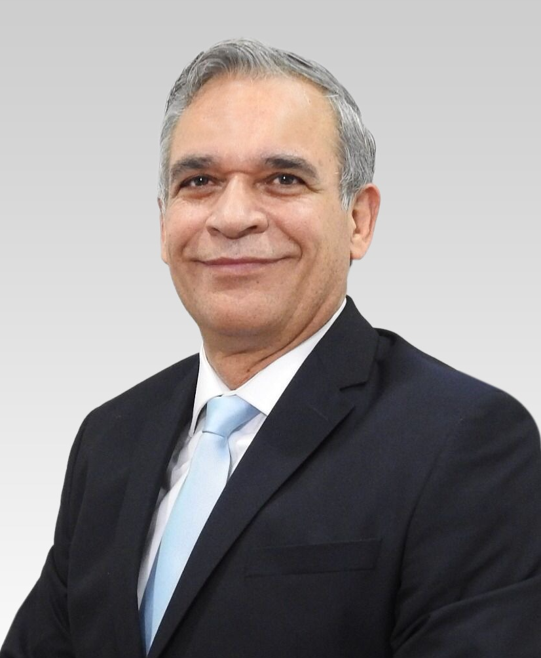
Dr. Héctor Aguirre Mariscal
VICEPRESIDENTE

Dra. MarisoL Huante Guido
SECRETARÍA

Dra. Ada Alicia Villatoro Paz
TESORERA

Dra. Nuria Esperanza Boronat Echeverría
Ex Adscrita al servicio de ORLP del Hospital de Pediatría del CMN SXXI

Dra. Aideé Pérez Holguín
Adscrita a CMN SXXI Hospital de Especialidades.

Dra. Diana Ramos Félix
Adscrita al Instituto Nacional de Pediatría
Dr. Blas Sánchez Reyes
Adscrito al CMN Manuel Ávila Camacho Puebla

Dr. Carlos de la Torre González
Asesor Académico y Coordinador del Programa Académico
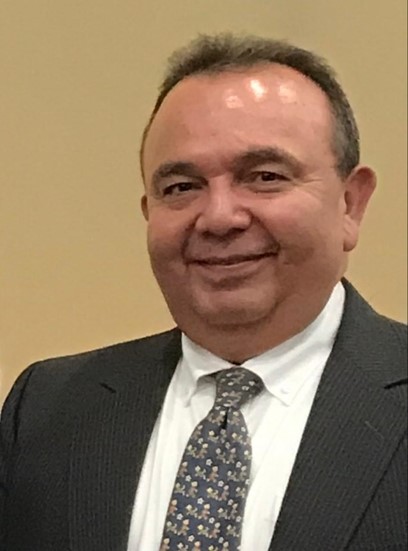
Dr. Ricardo Antonio de Hoyos Parra (Coordinador)
Representante de IAPO, México

Dr. Carlos Alberto Rodríguez Carrasco
Adscrito al servicio de ORLP del Hospital Infantil de Toluca

Dra. Andrea Orozco Sánchez
Adscrita en el Servicio de ORL Hospital Infantil de México Dr. Federico Gómez

Dr. José Antonio Marino Silva
Hospital ABC, Santa Fe

Dra. María Cristina Cortés Benavides

Dra. Natalia Peraza Ceceña
Servicio de ORL Hospital Central Militar
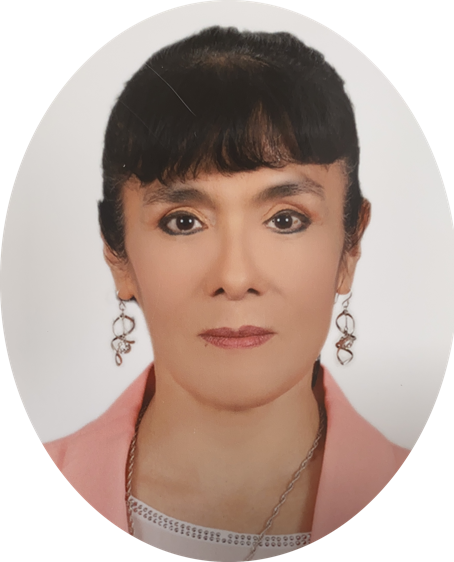
Dra. María Gabriela Quintanar Morales
Adscrita al Servicio de ORL Hospital General Regional No. 1 Cuernavaca, Mor.

Dr. Rubén Alejandro Cornejo Ballesteros

Dr. Carlos Eduardo Martínez Ruíz
Adscrito al Servicio de ORL
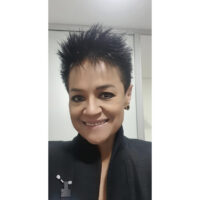
Dra. Yolanda Beatriz Sevilla Delgado
COMISIÓN DE DIFUSIÓN

Dra. Alejandra Ortega Salazar
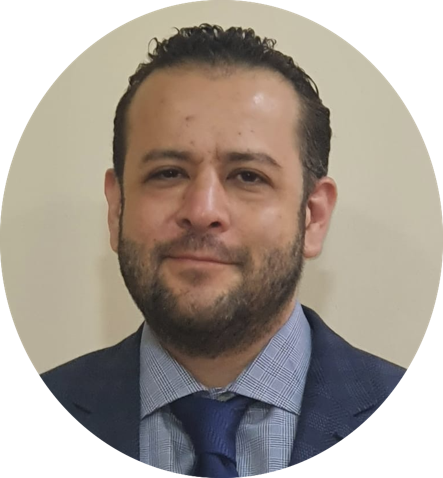
Dr. Mario Canales Medina